
_edited.png)
The Enduring Influence of Middle Eastern Oil Producers on Global Markets
The global oil market remains deeply shaped by a handful of Middle Eastern producers. Despite ongoing discussions about energy diversification and the rise of alternative sources, crude oil production continues to be heavily concentrated in this region. Saudi Arabia leads the world with roughly 1.35 million barrels per day (chart units), followed closely by Iraq, the United Arab Emirates, Kuwait, and Iran—all ranking within the top ten global producers. This means half of the world’s largest oil producers are in the Middle East, a fact that continues to influence global energy prices and market stability decades after the region first rose to prominence.
This post explores why Middle Eastern oil producers still hold such sway over global markets, how their production shapes pricing, and why investors and policymakers cannot ignore this reality.
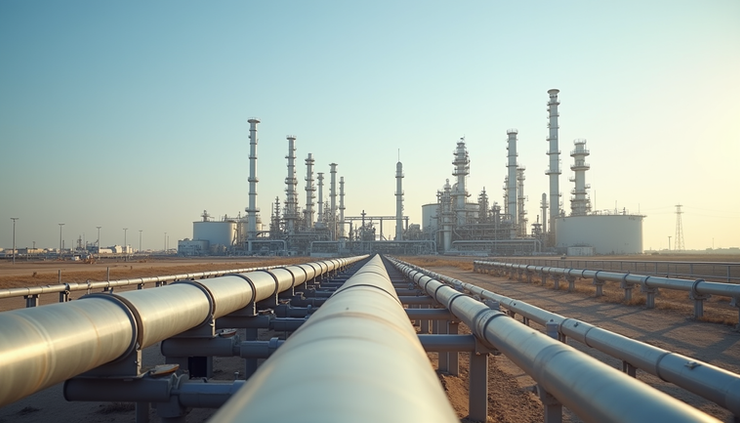
Concentration of Global Oil Production
Oil production is often discussed in terms of diversification, but the numbers tell a different story. Saudi Arabia produces about 1.35 million chart units, making it the largest single producer worldwide. Iraq (#4), UAE (#5), Kuwait (#7), and Iran (#8) also rank among the top ten producers globally. Together, these five Middle Eastern countries account for a significant share of global crude output.
By comparison, the United States and Russia remain major producers, but no other region matches the concentration seen in the Middle East. This concentration means that any disruption in the Gulf region—whether due to geopolitical tensions, conflicts, or infrastructure issues—can ripple through global markets and cause price volatility.
Why Geography Still Matters in Oil Markets
The idea that the world has moved beyond Middle Eastern influence on oil prices is a misconception. Geography continues to set the marginal barrel—the last barrel of oil needed to meet global demand—which largely comes from Middle Eastern producers. This is because:
Cost Efficiency: Middle Eastern oil fields generally have lower extraction costs compared to many other regions.
Production Capacity: These countries maintain spare capacity, allowing them to increase or decrease output to balance the market.
Strategic Location: The Gulf region’s proximity to major shipping routes like the Strait of Hormuz makes it a critical hub for global oil supply.
These factors ensure that Middle Eastern producers remain the price setters in the global oil market. Even with growing production from the U.S. shale industry and Russia’s vast reserves, the marginal barrel often comes from the Gulf.
Impact of Middle Eastern Supply Shocks on Global Pricing
Historical events demonstrate how disruptions in the Middle East continue to dominate oil pricing:
1973 Oil Embargo: OPEC’s decision to cut production caused a quadrupling of oil prices worldwide.
Iran-Iraq War (1980-1988): Fighting disrupted production and exports, leading to price spikes.
Gulf War (1990-1991): The invasion of Kuwait and subsequent conflict caused sharp supply concerns.
Recent Tensions: Attacks on oil infrastructure and geopolitical conflicts in the region still cause immediate price reactions.
These examples show that despite technological advances and new oil sources, the global market remains vulnerable to supply shocks in the Middle East. Investors who assume the world is immune to these risks overlook the underlying structure of energy production.
The Role of Middle Eastern Producers in Market Stability
Middle Eastern countries, especially Saudi Arabia, play a key role in stabilizing global oil markets. Saudi Arabia’s spare production capacity allows it to act as a swing producer, adjusting output to prevent extreme price swings. This function is critical because:
It helps smooth out supply-demand imbalances.
It provides a buffer during geopolitical crises.
It supports global economic stability by preventing runaway oil prices.
Other producers in the region, like the UAE and Kuwait, also contribute to this balancing act through coordinated efforts within OPEC and OPEC+ agreements.
Challenges and Future Outlook
While Middle Eastern producers remain dominant, the global energy landscape is evolving. Some challenges and trends include:
Energy Transition: Growing investment in renewables and electric vehicles may reduce oil demand over time.
Political Instability: Ongoing conflicts and sanctions can disrupt production and exports.
Technological Advances: New extraction methods and alternative sources could shift production patterns.
Despite these factors, the region’s vast reserves and strategic advantages mean it will continue to influence global oil markets for years to come.
What This Means for Investors and Policymakers
Understanding the enduring influence of Middle Eastern oil producers is crucial for anyone involved in energy markets or economic planning. Key takeaways include:
Risk Management: Investors should factor in geopolitical risks from the Gulf when assessing energy portfolios.
Policy Planning: Governments must consider the region’s role in energy security and pricing when designing energy policies.
Market Monitoring: Continuous monitoring of Middle Eastern production and political developments is essential for accurate market forecasts.
Ignoring the concentration of oil production in the Middle East risks underestimating the potential for supply shocks and price volatility.


